Student’s question:
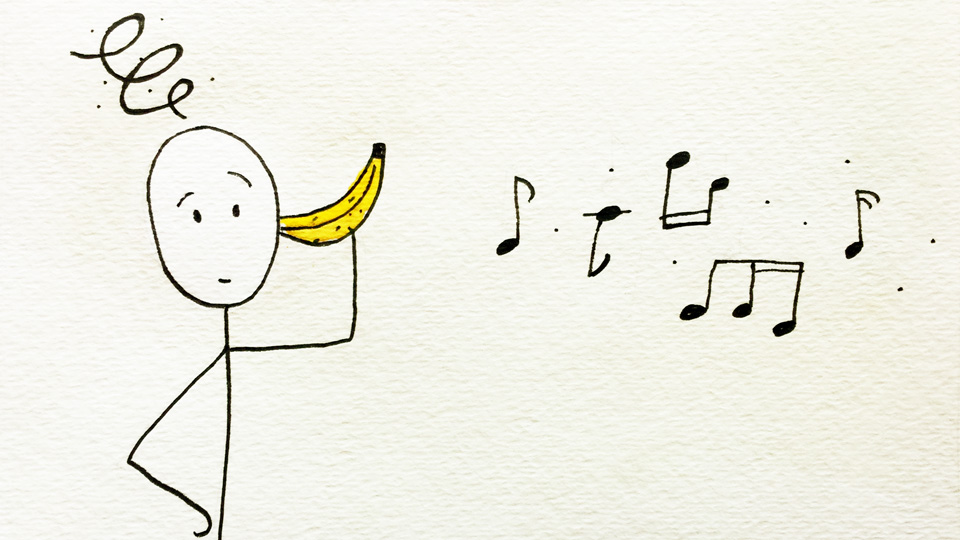
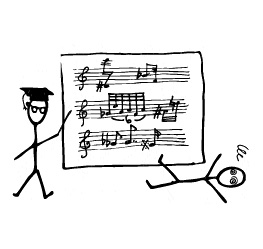
I am practicing both singing the numbers and the creative exploration, and I’m getting much better at recognizing the notes. However, when I listen to a song that I like, I am finding that the notes are flying by way too fast to make any sense of what is going on. Any thoughts? Will more of my singing activities help?
Some ideas to think about:
This is totally normal, just like learning a language. When you learn a new language, your first project is to develop a base of clarity with the most essential vocabulary and grammar. The best place to acquire this clarity is in a very controlled situation like a classroom where you have plenty of time to see each element clearly, think about it, practice using it, etc. This experience is essential. But then when you go out into the real world and try to make sense of the conversations all around you, there are two factors that will frustrate your efforts at first:
SPEED. There’s a limit to how fast you can process the sensations you receive. If someone is talking much too fast, you might not understand them even if they’re using words that you actually know. The same thing happens in music. Even as you’re gaining familiarity with the individual sounds, you might not have time to recognize and process each one when you hear them in a song. But as you gain experience over time, little by little you’ll start to recognize entire phrases of notes. For example, if a melodic phrase uses notes 3, 5 and then 4, you’ll recognize the entire melody 354 rather than having to ponder each individual note. How do we get there? Through all of the activities that you’re practicing in IFR, most especially your creative exploration with the jam tracks. If you’re playing mindfully, really listening to each note and thinking in tonal numbers the whole time, then your creative exploration is the best ear training in the world because it gives you repeated exposure to these musical phrases. And the more time you spend in this creative exploration, the more you’ll find yourself recognizing these sounds even in very fast melodies, because you’ve probably played that very same melody yourself a thousand times in your own music practice.
VOCABULARY. The other issue is that your favorite songs might include some sounds that you haven’t begun to study yet. All of these sounds are on the IFR path so you don’t need to worry about any of this. Just continuing on with your IFR practice, you’ll discover all of these beautiful sounds and musical possibilities the same way you’re discovering the sounds that we’re studying right now. But because of these additional elements in popular songs, not every song is a good candidate for you to practice your ear training skills right now. Whenever you’re unable to recognize the melody notes to a song, just remember that it’s quite possible that those are sounds that you simply haven’t studied yet, so it’s not even a fair test of your abilities.
One final point I want to make is about keeping all of this in perspective. Remember that music is an incredibly rich and diverse art form. It’s very similar to learning a language. In the beginning of your learning journey, you’ve only seen a tiny portion of the language so there will naturally be lots of sounds that you won’t recognize yet. And even the words and phrases that you do know can be expressed in ways that are unclear or too fast, so you might not recognize them in every situation. None of this should trouble you in the slightest. Just keep your focus on studying the sounds, appreciating their beauty and developing your own musical voice. And whenever you do happen to recognize a note or a musical phrase in the songs you love, take a moment to celebrate that victory and to appreciate how all of your musical training is coming together.